Vitamins After a Hair Transplant: What I've Taken for 6 Years
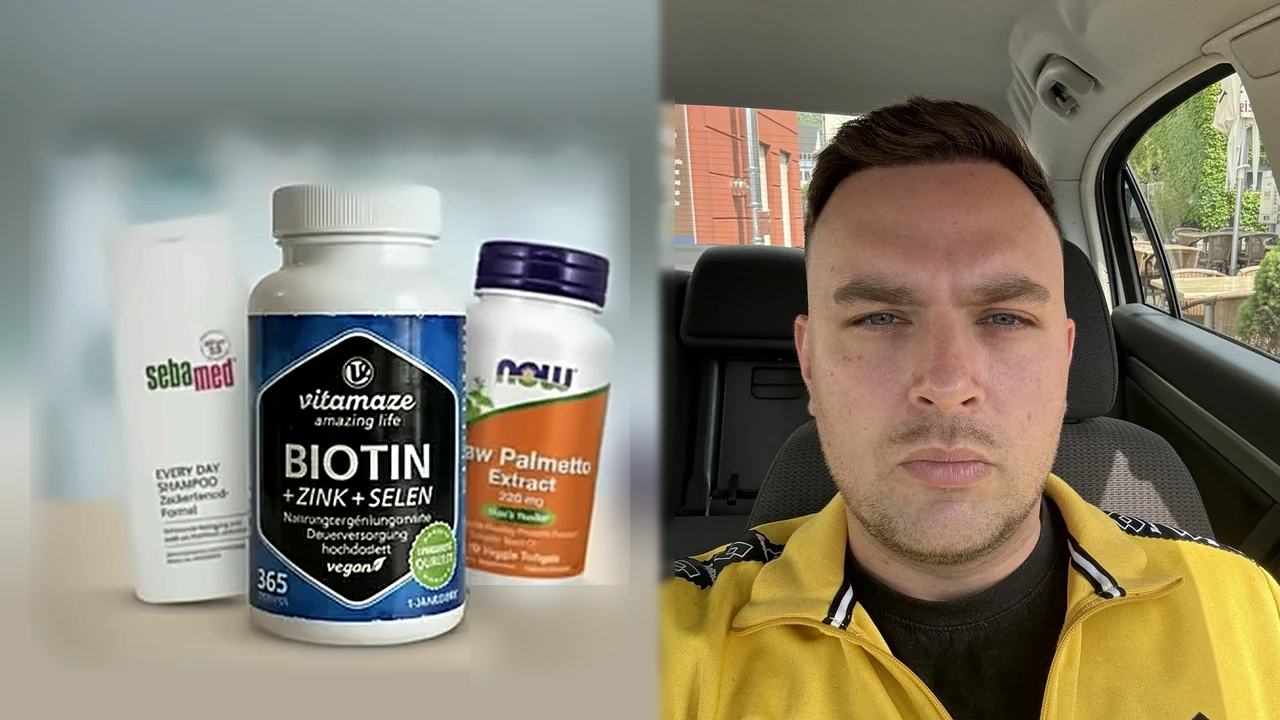
The three things people ask me about most
My name is Denys. On 15 July 2020 I had an FUE hair transplant in Istanbul — 3,500 grafts. Six years have passed, and the question I get most often isn't about the surgery itself, but about which vitamins I take after my hair transplant and what I wash my hair with. Here is the full answer, once and in detail — with photos of the bottles, the ingredients and the prices.
The main point first: you don't have to take vitamins after a hair transplant. You can take nothing at all. I take them in courses because it gives me peace of mind, but honestly — I don't know how much of my result comes from the vitamins and how much from the transplant itself and PRP.
I'm not a doctor. This is my personal experience, not a recommendation. Talk to a doctor before taking any supplements.
In short: what I take now
| What | Why I take it | Price |
|---|---|---|
| Vitamaze Biotin + Zinc + Selenium | my main "hair" vitamins | ~€21–25 for a one-year bottle |
| NOW Saw Palmetto 320 mg | in courses, 1–2 times a year | ~€23 for 3 months |
| Sebamed Every-Day shampoo | a mild everyday shampoo | ~€5 for 200 ml |
| PRP (plasma) | 2–3 times a year | — |
I don't use finasteride or minoxidil and never have.
How my routine changed over 6 years
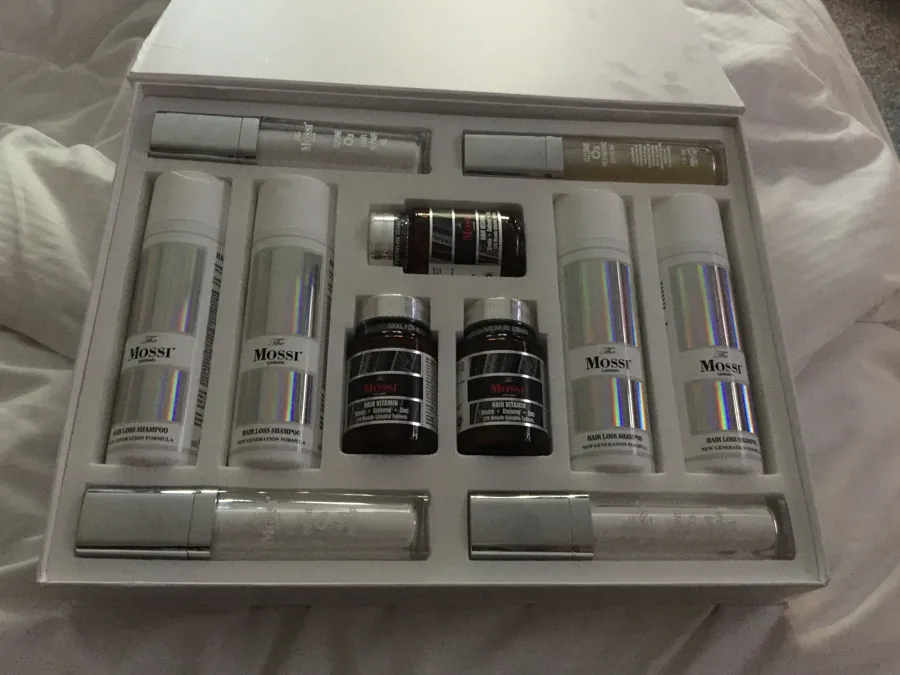
The Mossi London kit from the clinic — where it all started
- First six months. Right after the surgery I bought The Mossi London kit at the clinic for $200: shampoo, hair vitamins (biotin, ginseng, zinc) and oils. I started taking the vitamins from the kit straight away — they lasted about six months.
- Second six months. When they ran out, I switched to Xpecia. Back then a one-month pack cost about $10. I bought it in Turkey — it's sold in any pharmacy there, and when I ran out, I asked friends who were flying to Turkey to bring some back.
- The next ~2 years. I took Xpecia in courses: 3 months on, 4 months off.
- After that. I gradually read articles and watched what people said about hair vitamins, and ended up with what I take now: biotin with zinc and selenium, Saw Palmetto and a mild shampoo.
1. Biotin + zinc + selenium (Vitamaze)
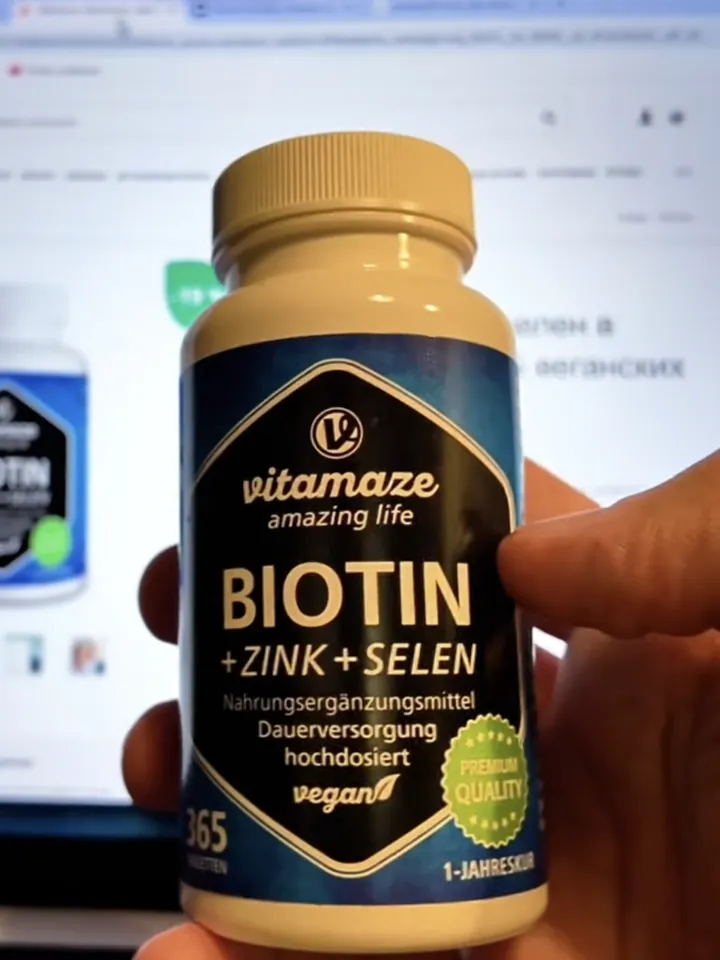
Vitamaze: biotin, zinc and selenium, 365 tablets for a year
Vitamaze is a German brand. One tablet contains:
- biotin — 10,000 mcg;
- zinc — 10 mg;
- selenium — 55 mcg.
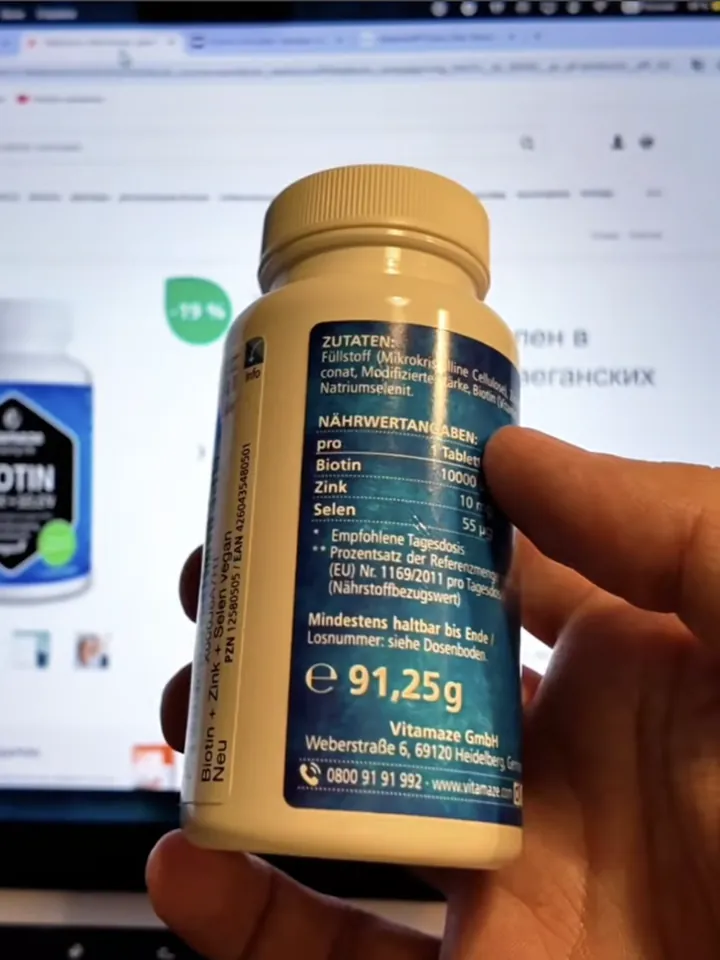
The label: 10,000 mcg biotin, 10 mg zinc, 55 mcg selenium
The bottle holds 365 vegan tablets — a year's supply if you take one a day. In Europe it costs about €25; I got it for €21. It isn't available everywhere outside the EU, and shipping adds to the price.
I found out about these vitamins on YouTube: I was watching a video by someone who had also had a transplant, and in my third year I decided to try them. I liked the formula — biotin, zinc and selenium in one tablet. It's convenient: one bottle for a whole year instead of three different ones. Before this I ordered hair vitamins from Turkey plus biotin separately, and together that came out more expensive. So far I'm happy with it.
2. Saw Palmetto 320 mg (NOW)
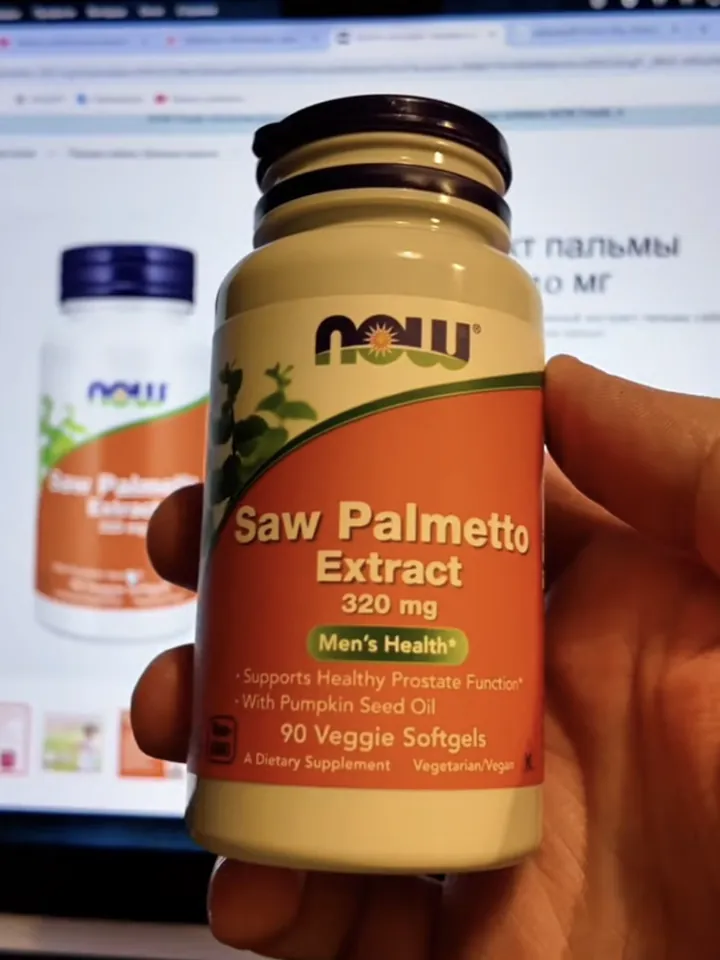
NOW Saw Palmetto 320 mg, 90 softgels — one 3-month course
Saw palmetto extract from the American brand NOW. 90 vegetarian softgels, one a day — enough for 3 months. The usual price is about €29; on sale I pay €22–23.
I learned about Saw Palmetto on hair transplant forums and decided to try it. Honestly, I can't say how much it improved my result: I don't know what my hair would look like without it.
Two more things you can see right on the bottle:
- It's sold as a "men's health and prostate" supplement — not as a hair loss treatment.
- It's not finasteride. People in the comments under my video sometimes mixed them up. Finasteride is a prescription drug. Saw Palmetto is a plant-based supplement. It's thought it may work in a somewhat similar direction, but much more weakly, and there's little solid research (more below).
3. Sebamed Every-Day shampoo
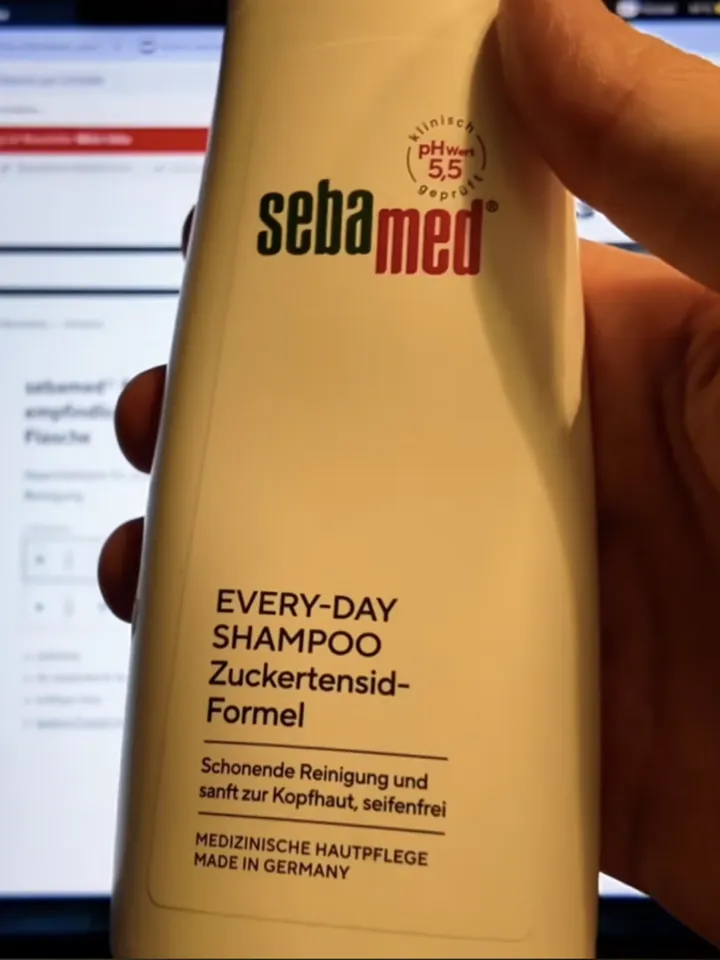
Sebamed Every-Day: a mild everyday shampoo
The shampoo from The Mossi London kit lasted me about six months. When it ran out, I switched to Sebamed Every-Day Shampoo (made in Germany). What the bottle says:
- pH 5.5 — close to the skin's natural pH;
- a mild sugar-based formula, soap-free;
- no silicones or microplastics, vegan.
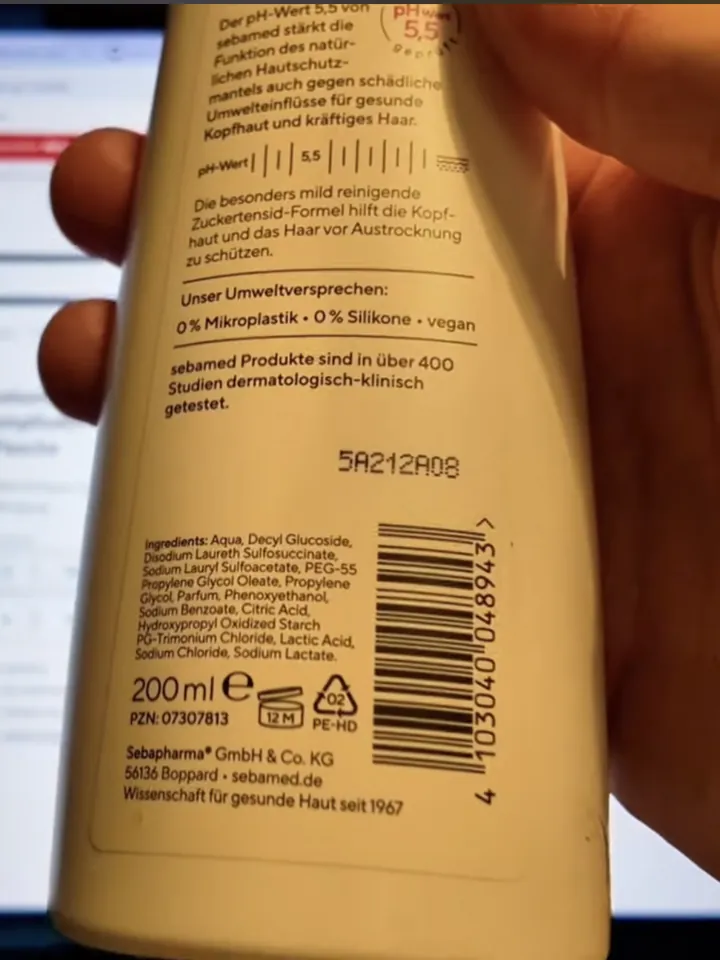
The label: pH 5.5, soap-free, no silicones
200 ml costs about €5, 400 ml about €8 — the big bottle is better value. I like the smell and the price-to-quality ratio. Nothing special, just a good mild everyday shampoo.
How I take them: my routine
- A course lasts 3 months, then a break of 4–5 months. Sometimes it varies.
- Usually one, at most two courses a year, more often in winter — I think it's not a bad idea at that time of year.
- I do PRP (plasma) 2–3 times a year. In the first year after the transplant I had 5 sessions: the first one during the surgery itself, then roughly every 3 months.
I don't believe "the more, the better". And I don't think vitamins replace normal food and a healthy lifestyle. If you drink a lot, smoke and eat badly, no bottle will help. I try to eat well myself, but it doesn't always work out. I rarely exercise these days — I'd like to do it more often, but I don't always have the time.
What I noticed myself
- Hair, nails, skin. Honestly — hard to say. I never really had problems with them, and I didn't see a big difference between the months on vitamins and the breaks.
- Side effects. None in all these years. But that's my body — someone else's may react differently.
- PRP. This one I can say for sure: after the sessions my hair feels thicker somehow. Of everything I do, it's the only thing whose effect I really notice.
- Tests and trichologist. I've never had blood tests before taking vitamins and never saw a trichologist. I'm telling it as it is. But if you're just starting, the research below shows vitamins mostly help when you're deficient — so checking that with a doctor makes sense.
What the research says — honestly
I'm not trying to sell you vitamins, so here's what I found in the sources myself:
- Biotin noticeably helps hair mainly when you're low on it — and true biotin deficiency is rare. A review of the research in Skin Appendage Disorders found no convincing evidence that it grows hair in healthy people.
- Biotin can affect blood test results. The US Food and Drug Administration (FDA) has warned that biotin from supplements can interfere with some lab tests — above all troponin (a test used when a heart attack is suspected). If you're having blood work done, tell your doctor you take biotin.
- Saw Palmetto: a 2020 systematic review found that the data are limited and weak. Some effect is possible, but it's far from a medication.
- Zinc and selenium — more isn't better. Adults have safe upper limits: 40 mg of zinc and 400 mcg of selenium a day (US National Institutes of Health). Too much selenium can itself cause hair loss and brittle nails. My tablet has 10 mg of zinc and 55 mcg of selenium.
So my honest conclusion: vitamins aren't what makes the result. The result comes from the doctor, the donor area and the transplant itself. For me, vitamins are calm support, nothing more.
My hair now — 6 years after the transplant



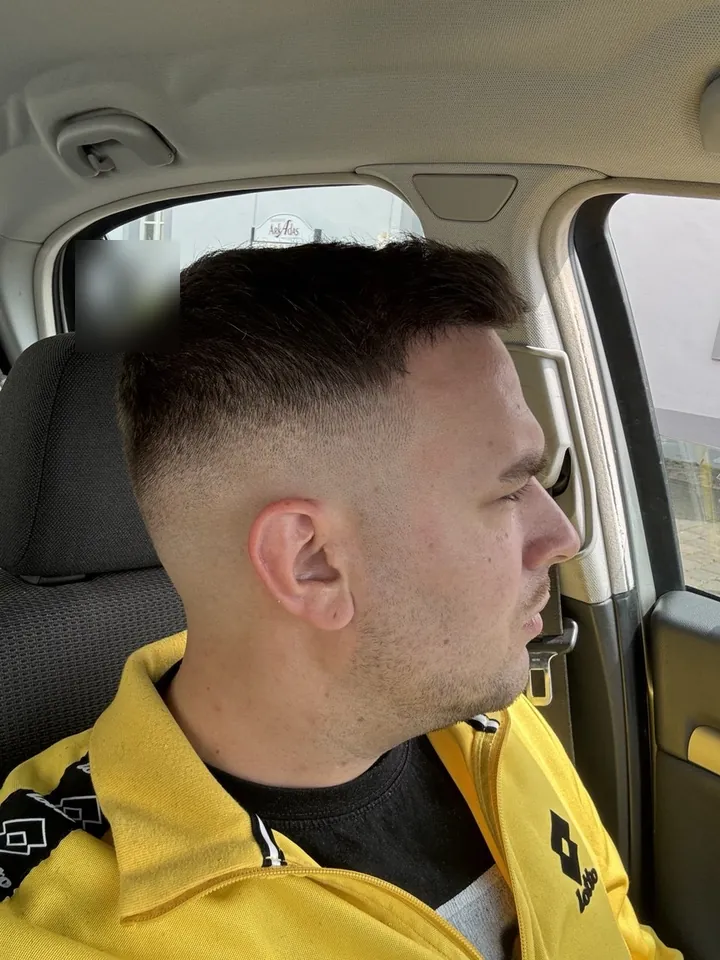
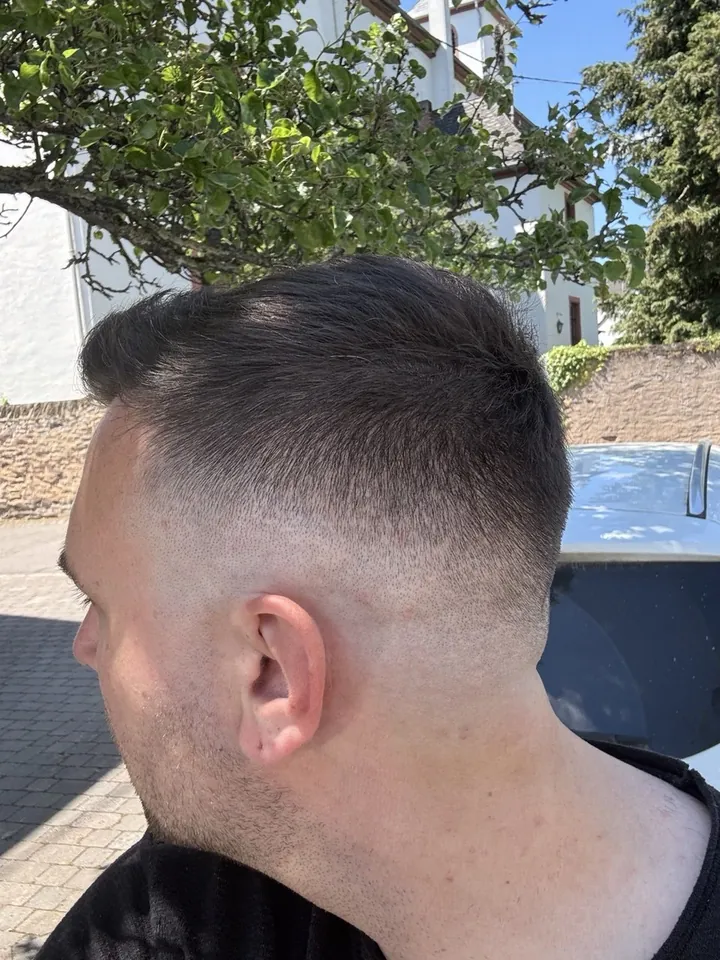
6 years after FUE hair transplant: front, top, both sides and outdoors
No finasteride or minoxidil, just this routine. The short fade haircut is on purpose — so you can see both the transplanted area and the donor area.
FAQ
I'm not a doctor and I only write about my own experience. I have no sponsors, and these aren't affiliate links. Make decisions about supplements and treatment together with your doctor.
Hair transplant without finasteride — what I actually take
Want to go through your own situation?
I'll tell you what I did in the first year and after, help you prepare questions for the clinic and avoid paying for things you don't need.
Book a consultation — €55