Hair Transplant Month by Month: What Happens From Month 1 to 12
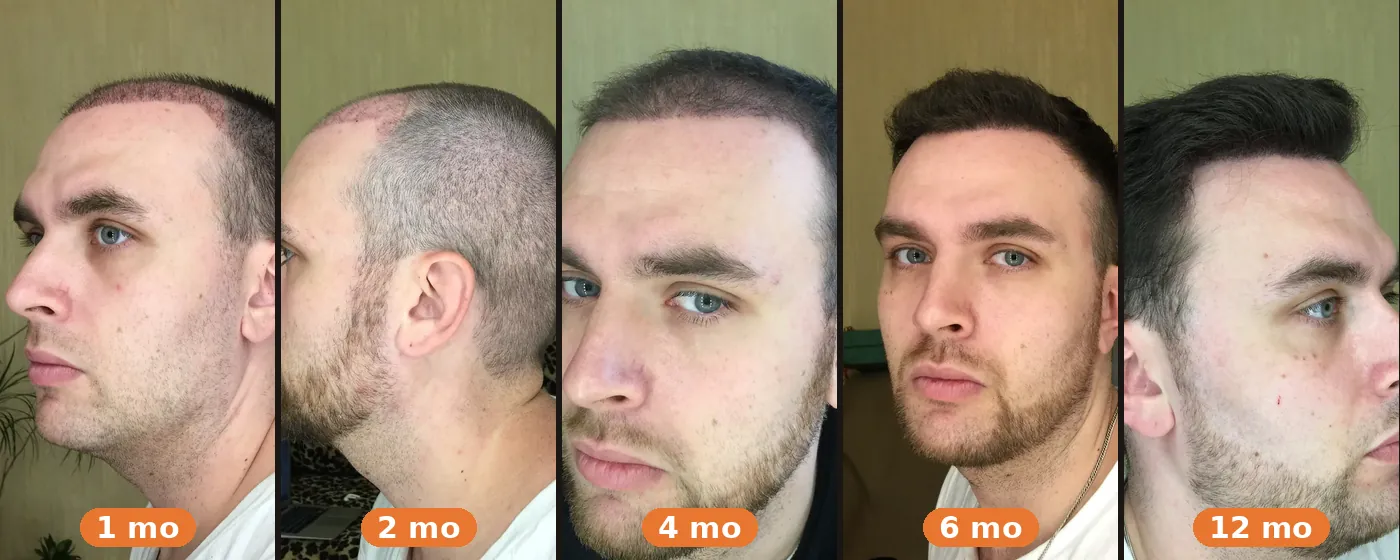
The same person at 1, 2, 4, 6 and 12 months after the transplant
The result of a hair transplant doesn't arrive all at once — it comes in steps. First your head looks even worse than before surgery, then fuzz appears, and only by about a year does the hair reach full density. If you don't know this calendar in advance, it's easy to panic exactly when everything is going to plan.
In short: month 1 is healing, in month 2 most of the transplanted hairs fall out, growth starts in month 3, by months 4–6 you see the result in the mirror, and by month 12 the picture is close to final.
My name is Denys. In July 2020 I had 3,500 grafts transplanted with FUE, and I photographed my head through the whole first year. Below: what's normal at each stage, what you can and can't do, and how it went for me.
I'm not a doctor. This is one patient's experience, not medical advice. Timelines differ from person to person: some things go faster, some slower. Discuss your own case with your clinic.
The first year in 30 seconds
| Period | What happens | How it was for me |
|---|---|---|
| Month 1 | Scabs gone, stubble, pink skin | Back at work right after the scabs |
| Month 2 | Transplanted hairs fall out — normal | Shedding peaked around month 2 |
| Month 3 | First thin fuzz | Growth came in fairly evenly |
| Months 4–6 | Clearly thicker hair | Result visible in month 4 |
| Months 7–12 | Thicker hair; judge at a year | Kept thickening after month 6 |
Month 1: scabs are off, the skin is still pink
The most careful first days end around day 10, when the scabs are removed. I described those days in detail in the story of my transplant. Here we start from the moment your head is clean.
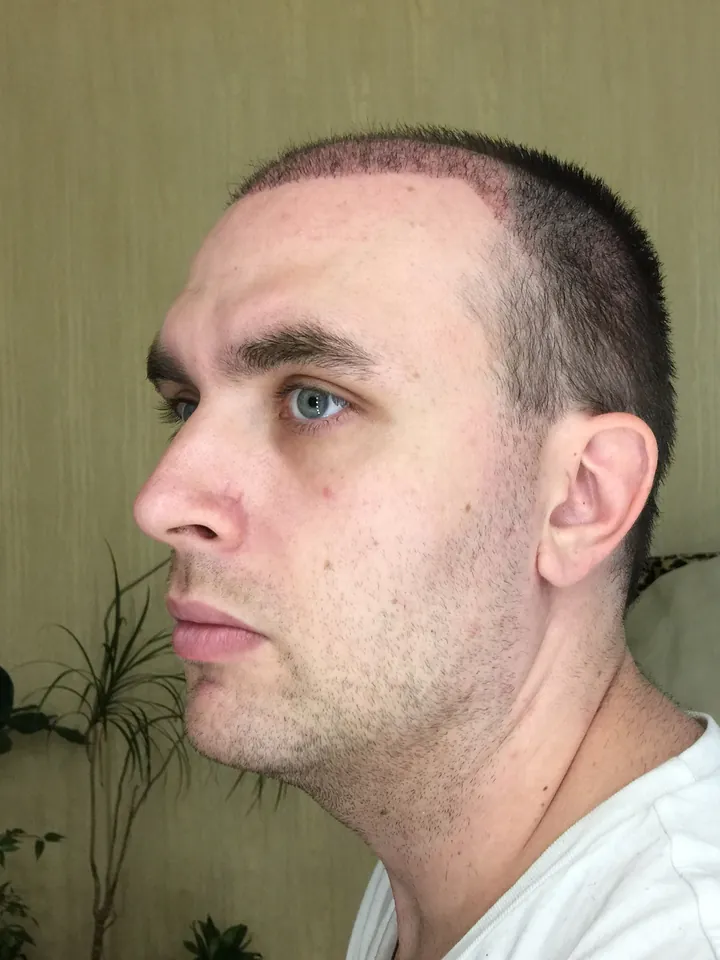
Day 29: no scabs, pink skin, short hair
What you see. The transplanted area looks like short stubble on pink skin. Pinkness is a common worry, and it's very individual: for some it fades in 2–3 weeks, for others it stays for months. It depends on your skin type and isn't a sign of trouble in itself.
What you can and can't do. You can go back to work as soon as the scabs are off, unless your job involves dust, heat or a helmet. No gym, pool, sauna or direct sun in the first month.
How it was for me. I went back to work right after the scabs came off. I washed my hair every day or every other day, once a day. For the first year I used the clinic kit shampoo, then moved to an ordinary gentle one — I named it in my article on vitamins and care. A pinkish tone stayed on the transplanted area until almost month 8.
Month 2: the hair falls out, and that's normal
From around the second week the transplanted hairs start to fall out. This is called shock loss. For me it was strongest around month 2 and over by month 3. Most of the transplanted hairs go — for me about 80%.
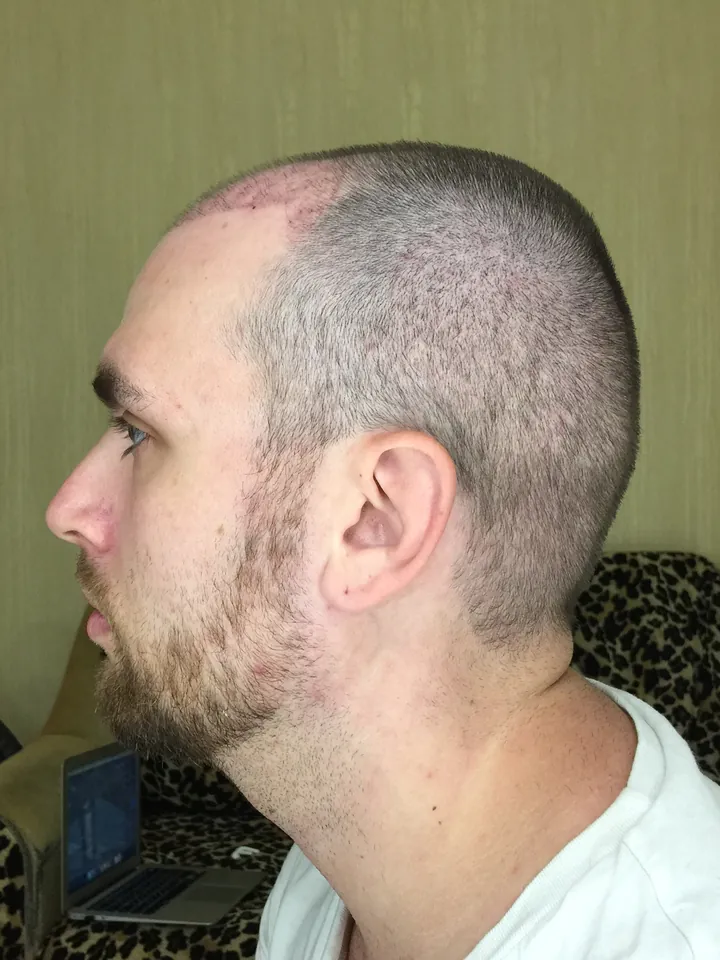
Day 60: the transplanted hairs have almost all fallen out
What you see. At the "emptiest" point your head looks worse than before surgery: your own hair is still there, but the transplanted hairs are almost gone. It can look as if it was all for nothing. But what falls out is the hair shaft, not the part it grows from. The root stays in the skin and starts a new hair a few weeks later. There will be a separate article about shock loss.
What you can and can't do. Sport — once the skin copes calmly with effort and sweat. I went back to the gym in months 2–3.
How it was for me. I didn't worry for a single day, because I knew about the shedding in advance. Before the surgery, and even more after it, I watched a huge number of other people's month-by-month results on YouTube and saw that everyone gets through this dip.
Month 3: the first fuzz
What you see. The first new hairs appear: thin, light, barely visible in places. You may not see it in the mirror right away; it's easier to spot in a photo in good light.
How it was for me. Some spots came a bit earlier, some a bit later, but overall the growth was fairly even. I had no hairs growing the wrong way and no ingrown hairs. Only small pink pimples that went away on their own.
A tip that works. Photograph your head in the same place, in the same light and from the same angle every 2–4 weeks. Day to day you won't see a difference; a month apart it's obvious.
Months 4–6: you see the result in the mirror
What you see. This is the nicest stage. The hair gets longer and denser, and the transplanted area stops looking like "fuzz".
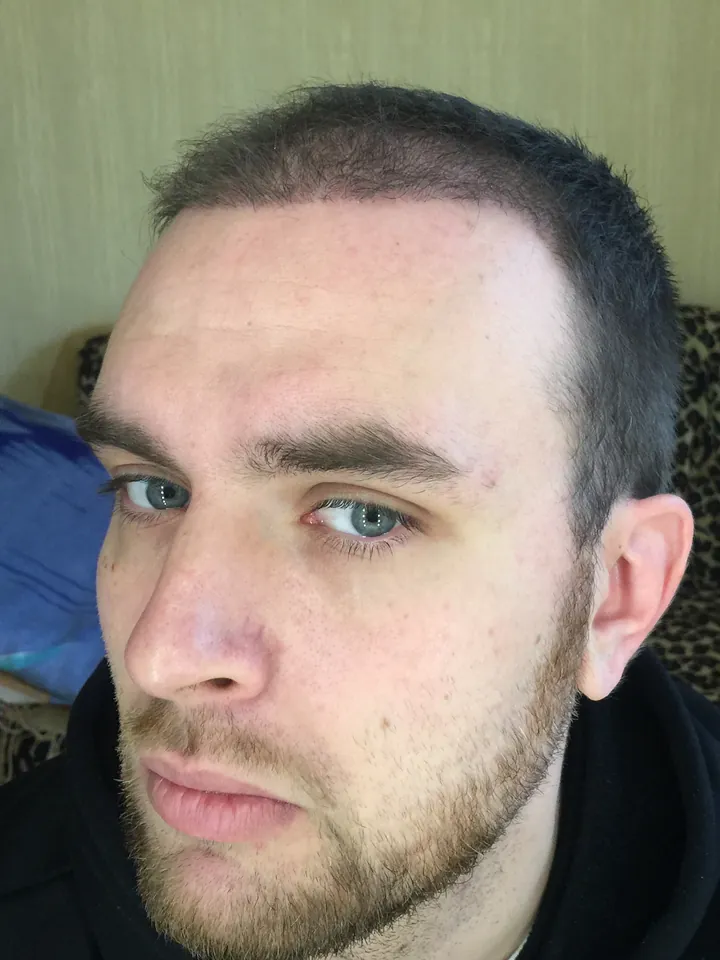
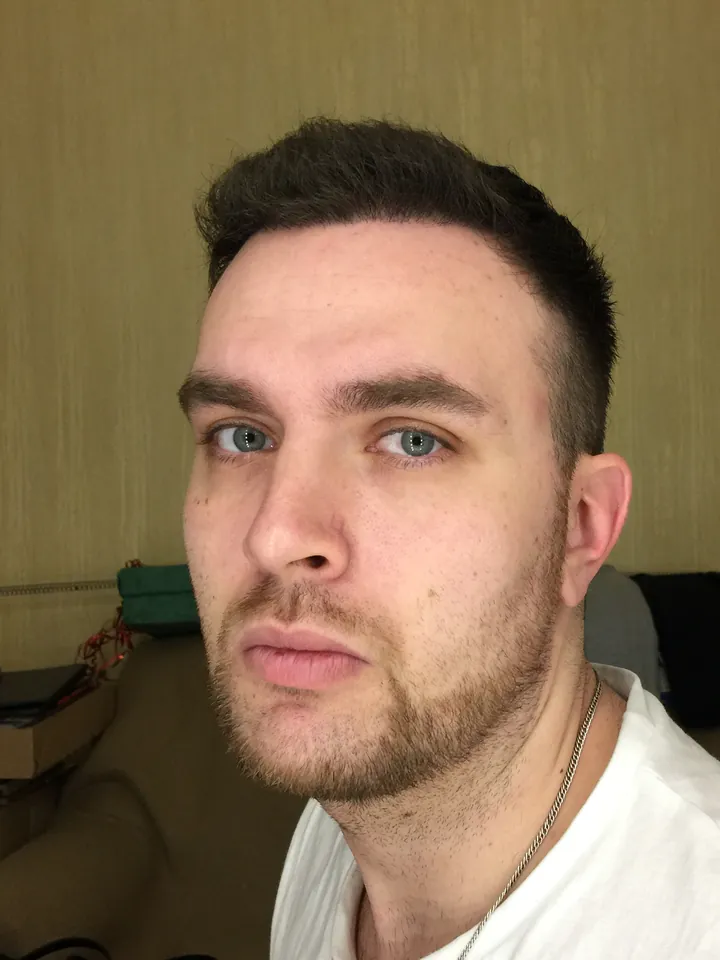
Days 120 and 180: the result is visible and the hair keeps thickening
What you can and can't do. By this stage the pool is usually fine again. Check the exact timing with your clinic.
How it was for me. In month 4 I could already see the result, and months 5–6 looked great. Photos made comparing easy: in the mirror, day after day, the difference gets lost. I went to the pool in months 4–6. At first I trimmed the transplanted area myself at home, with scissors; my first barbershop visit was only about a year after the surgery. From around month 6–7 I started using styling products now and then. I liked a liquid product from Reuzel — it feels light, not like a heavy gel. I use it rarely.
Not sure whether what you see in the mirror is normal? We can go through your case by photos and timing: consultation — €49 →
Months 7–12: the hair thickens to the final result
What you see. Growth doesn't stop after month 6. The hair keeps getting noticeably denser and thicker, and the style holds its shape better.
What you can and can't do. Sun and sauna are the last things to come back.
How it was for me. In summer I covered the transplanted area with a cap against direct sun until month 6–8. I left the sauna for the very end too. For me the final result was the one-year mark: judging before 12 months is too early, in month 6 the hair is still gaining density.
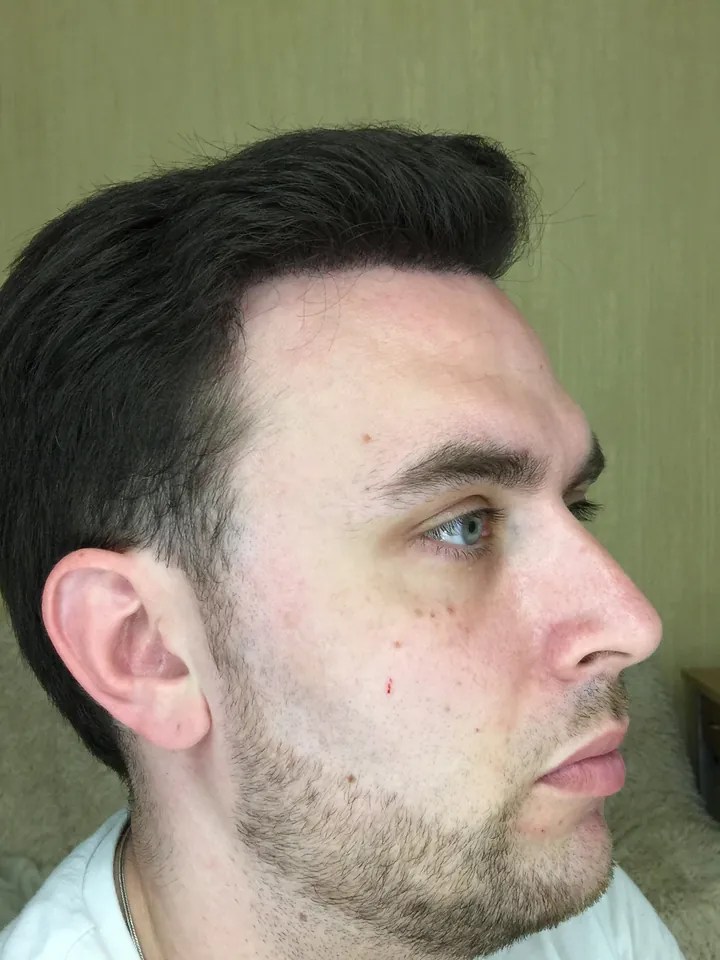
Day 360: the result of year one
Looking back: what surprised me in year one
What surprised me. The speed. Growth started in month 3, and from then on the hair came in very fast. By month 4 the result was already very good — I didn't expect that myself. All along I was sending photos to the clinic manager I was in constant touch with. In month 4 he said it was simply a great result, which made me even happier.
What I'd do differently. Nothing. If I were having the transplant now, I'd go through it the same way. I followed the aftercare recommendations from start to finish, and I think that also played a part in the result. Basically, everything I followed is described in this month-by-month guide.
If you're still choosing a clinic. For me this was one of the most important decisions. Don't rush: watch the clinic and its results for a couple of months, then go. How to do that is in my article on choosing a clinic.
What next: does the result last 6 years on?
The most common question after "when will it grow" is "will it fall out later?". For me 6 years have passed: everything holds just as it did at one year. I don't see any thinning behind the transplanted line.

6 years later
There are periods when more hair falls out, for me more often in winter. Then new hairs grow in their place. As far as I know, this is the normal hair cycle everyone has, and transplanted hair is no exception. I don't pay much attention to it.
How I look after my hair now is in my articles on PRP and vitamins.
Normal, or a reason to call the clinic
I had no complications, so this part isn't my experience but general guidance. If in doubt, call the clinic that did your transplant and send them photos.
| Most likely normal | Better show your clinic |
|---|---|
| Pink skin on the transplanted area for weeks or months | Pain that gets worse over time instead of easing |
| Transplanted hairs falling out in months 1–3 | Pus, strong swelling, hot skin, fever |
| Small pimples that go away on their own | Pimples that hurt, grow or don't go away for weeks |
| Uneven growth in months 3–5 | Almost nothing has grown by month 12 |
| Seasonal shedding years later | Fast thinning of areas that doesn't stop |
FAQ
Check your own case
If you want to estimate how many grafts you need and whether your donor area is enough, try the graft calculator. And the story of my operation — from the decision to the day at the clinic — is in “My Hair Transplant Experience in Istanbul”.
Want to go through your own situation?
I'll tell you how it went for me and help you prepare questions for the clinic. This is personal experience, not medical advice.
Book a consultation — €49