My Hair Transplant Experience: FUE, 3,500 Grafts, Istanbul
For twelve years my hair slowly receded, and then in a single year it all fell apart. Below: how the surgery went, how I recovered and what changed on my head month after month.
In short: in summer 2020 I had FUE done in Istanbul, moving 3,500 grafts. The first ten days need the most care. After that, about 80% of the transplanted hairs fell out (that's what shock loss looks like), growth kicked in from the third month, and within a year everything had grown back. That was six years ago.
I'm not a doctor. This is my personal experience, not medical advice. Timelines and aftercare rules differ for everyone, so check them with your clinic.
Why I Decided to Get a Hair Transplant
I started losing my hair at 20. My crown never thinned — it was the front: year after year the hairline slowly crept back. As I understand it, it's hereditary — my father was bald too. For twelve years I simply lived with it. I didn't try minoxidil or vitamins — honestly, I didn't even know those things existed.
At first, from about 20, I just combed my hair over to hide the bald spots. Later I started wearing caps, and for the last five years before the transplant I wore a cap all the time.
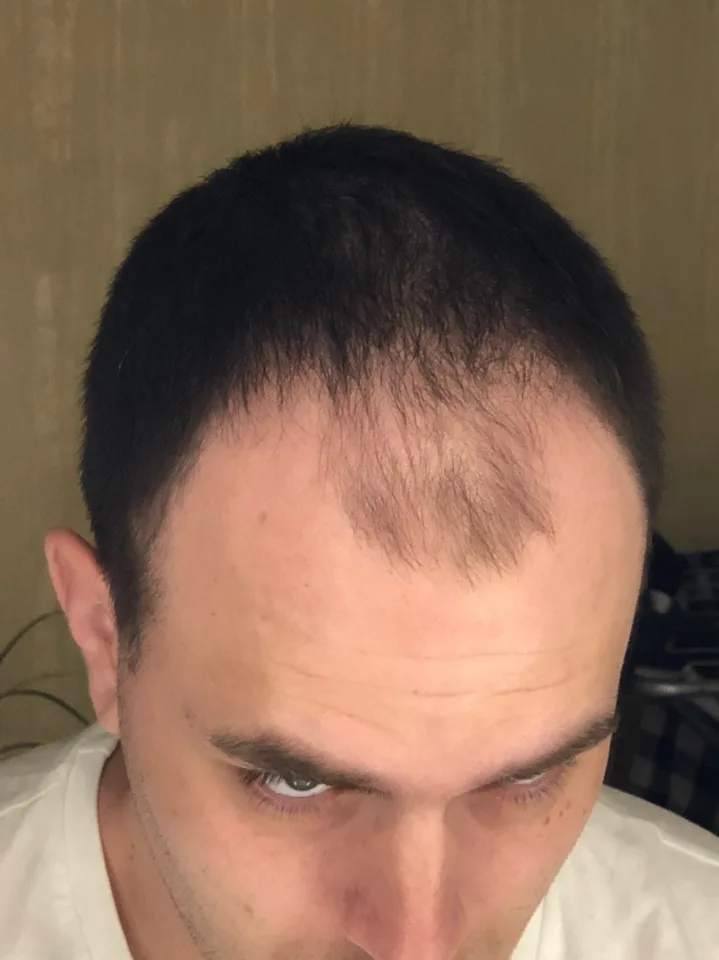
Before: Norwood 4 after years of gradual hair loss
Then, at 33, came a year full of stress — and in that single year my hair loss jumped to Norwood 4. It happens to many people: the body holds on for a long time, and then gives way all at once. That's when I decided on a transplant.
The Day of the Operation
I took only a backpack and a button-up shirt — I was advised to bring one so I wouldn't have to pull clothes over my head after the operation. The manager ordered the taxi to the clinic for me.
The evening before the operation I was a little nervous, but it passed.
Before it started I was a little scared, but the fear passed quickly: the anesthesia kicked in, the extraction began, and I no longer felt anything.
In fact I was afraid of only two things: the anesthesia, and whether the transplant would go well and give a natural-looking hairline. I had no other strong worries.
First they drew the hairline markings and shaved my head. Then they started extracting the grafts from the back of my head: all 3,500 took about three to three and a half hours. When the extraction was finished, they put on a bandage and fed me, and only then did they go on to implant the grafts into the front of my head — that took about four hours. All in all, about seven hours of work plus the break.
At first, while they took the grafts from the back of my head, I lay slightly face down. After the bandage and the snack I turned onto my back: the implantation was done in a special hair-transplant chair, with a slight tilt. The hours passed differently — sometimes I fell asleep, sometimes the TV was on or there was music; I don't remember exactly whether it was a movie or music.
I spent the first night at the hotel calmly: I took the painkillers the clinic gave me, didn't feel bad and slept well. A little blood showed through the bandage onto the pillow, but it was nothing scary — I handled it fine.
The next morning the donor area hurt a little, where the grafts were taken, but there was nothing special.
When the bandage came off and they washed my head, I saw nothing special. It was a bit unpleasant, because that is where the grafts had been taken, and I disliked it when they touched that area.
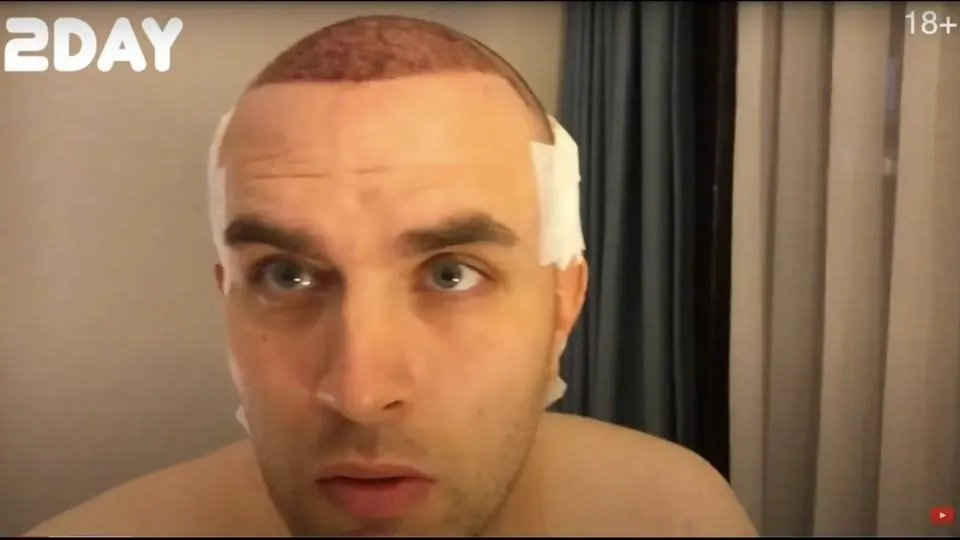
Day 2 after the operation
When I first saw the new hairline, I liked it: the work was done well and I'm very happy with it.
How I Recovered
Swelling and redness. The most uncomfortable part is sleeping: for the first 10 days you have to sleep so that nothing touches the grafts.
Scabs form on the grafts — you must not scratch or pick them off. The main things in this phase: careful sleeping and gentle washing.
The scabs don't fall off by themselves — around day 10 you're advised to remove them yourself. I did it with an ordinary cotton pad: soaked it in water and gently washed them off, very carefully. After that the head is clean. It took about 30 minutes. The clinic explained: until day 10 the grafts are taking root, and after that the dried blood is no longer needed.
Shock loss: roughly from day 10 to day 90 about 80% of the transplanted hair fell out — you can see it in the photos below. This is normal, the roots stay in place, and I knew about it in advance. What it looked like day by day is in the shock loss article.
Active growth. For me it started from month 3 and continued strongly until month 6 — thin hairs at first, then they get thicker and thicker.
The final result. By month 12 the hair had fully grown in — thick and natural.
What's normal at each stage is collected in a separate guide: hair transplant month by month →
When the anesthesia wears off
Around day two or three the anesthesia starts to wear off. It can move down to the forehead and the bridge of the nose and cause slight swelling of the face, so people are advised not to keep the head tilted far forward and to sleep with the head slightly tilted back, so the anesthesia doesn't drain downward. I had no serious swelling, only a little on the bridge of the nose. It lasted two to three days and by day 6–7 it was no longer visible.
At home: what I remember
Sleeping was the hardest part. I put a pillow under my cheek so I wouldn't lie on the donor area: the skin there was still healing and the feeling was unpleasant, and I didn't want to touch it. It stayed awkward until about day 10.
I had no itching or any strange sensations on my scalp. The only thing was a few small pimples: they appeared somewhere between the first and third month and went away on their own.
Nothing surprised me. Going outside didn't bother me at all. This is my personal experience — it may be different for other people.
My parents knew I wanted to do this. When it was done, they took it well and said: we support you, if you want it, go ahead.
People who knew me before understood right away. Many others had only ever seen me in a cap, so they couldn't compare before and after. Even now, most people who meet me can't tell it's a transplant.
For me that is the best sign that the result looks natural.
Until day 20 I applied the special oils I was given. After that, for a while, I used a different oil to help the donor area at the back of my head heal.
Once the back of my head had healed, nothing was visible there. After about a month it was barely noticeable, though there was still a slight numbness. I don't remember in which month it went away, and I think it is individual for everyone.
Until the third month I trimmed the donor area with small scissors: there was only a little hair there, but I trimmed it anyway. The part where the grafts were taken I cut with a clipper and an attachment, nothing special.
Sun, comb and small things
This is what didn't fit into the day-by-day timeline: small things I noticed myself.
Tanning is allowed from about the sixth month, as far as I remember, and even then a cap was better. The clinic manager gave me a list of restrictions, and I followed it.
I bought a special comb made of wood, so I wouldn't use plastic: plastic combs cause static. A bamboo brush works fine too.
For about a year I photographed my head regularly, almost every day during the first 30–60 days: front, back, sides and top, and I also recorded video reports.
What the hair was like
These are my own observations over six years, with no measurements or tests.
I knew the hair would start sprouting around the third month and that this was normal, so I wasn't surprised when it did.
For the first year the transplanted hair was a little different from my own, slightly coarser. After a year it changed and became the same as the rest of my hair in structure.
Now I can grow the front longer, trim the sides short and have a proper, normal haircut, and I no longer have to hide any areas.
The first two weeks in photos
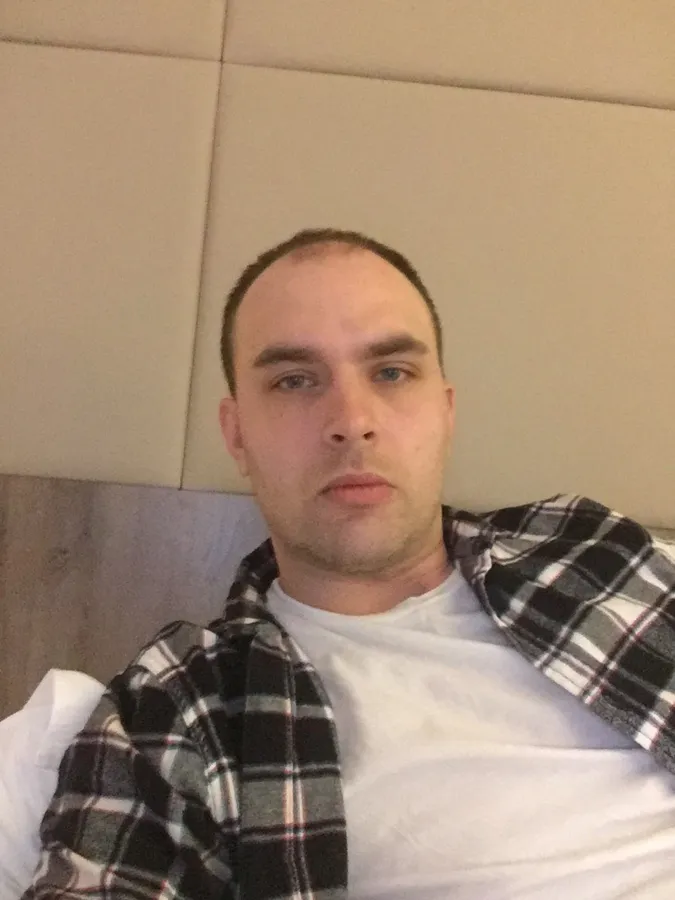
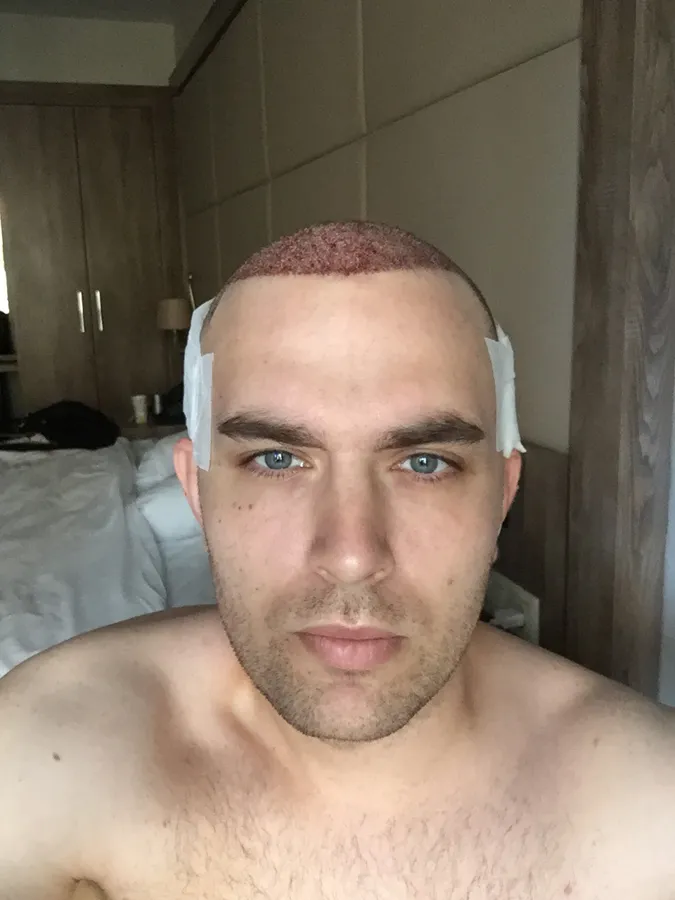
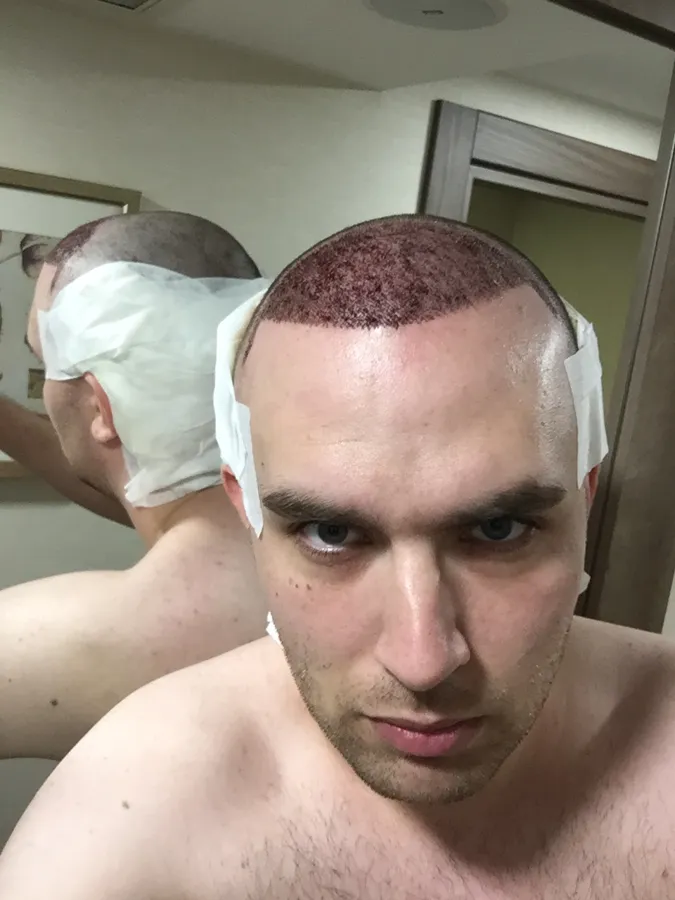
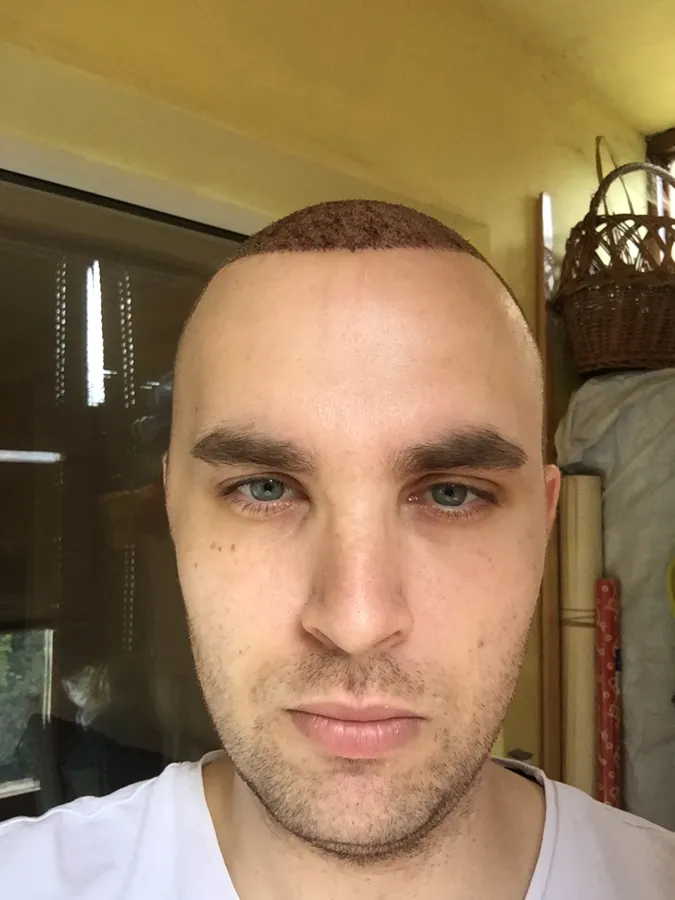
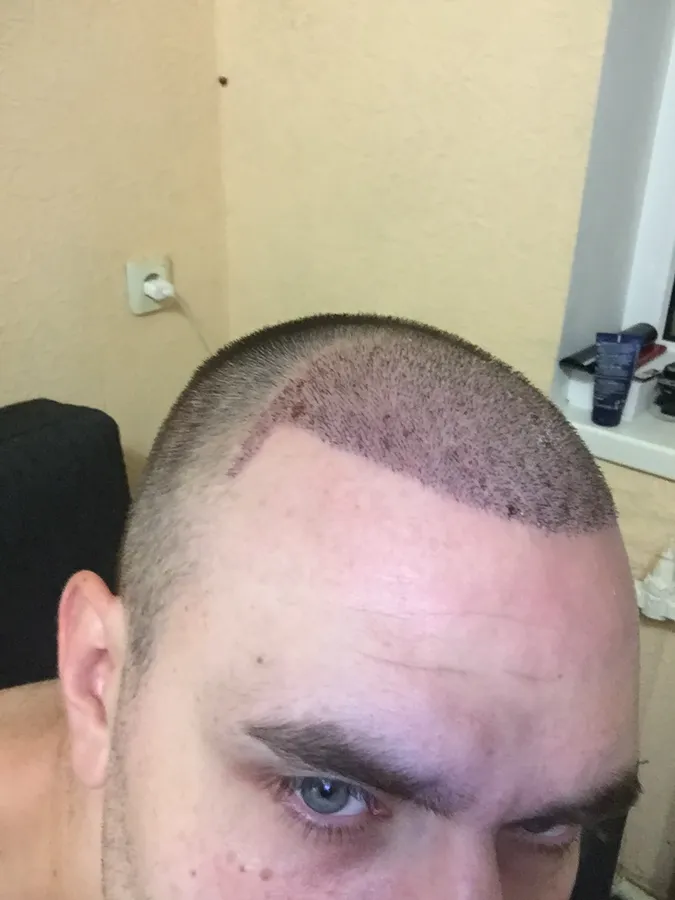
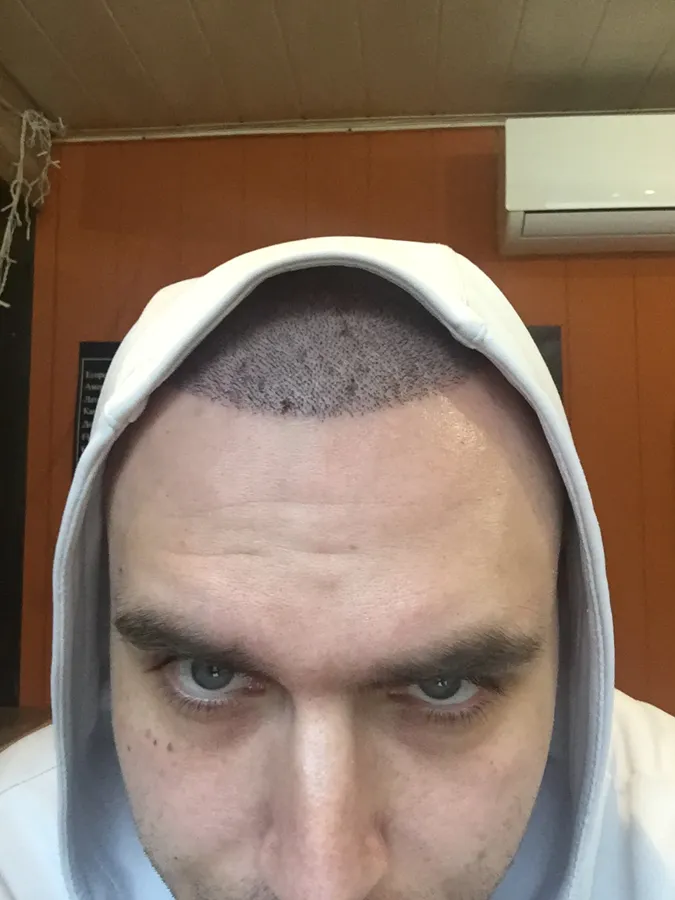
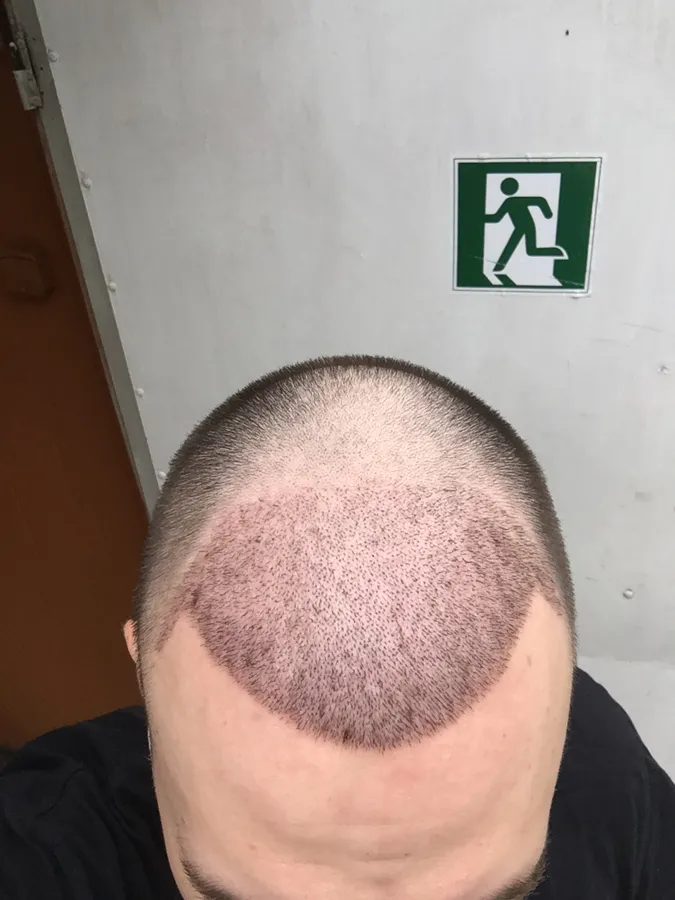
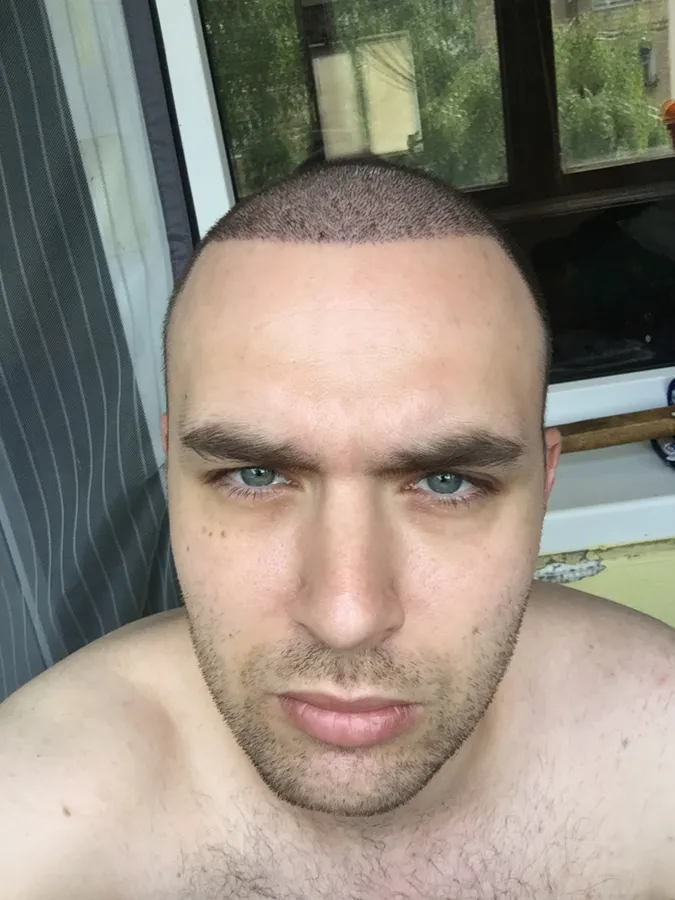
My real photos, July 2020
Wondering whether the same path would suit you? I'll tell you what I would ask the clinic in your place: consultation — €49 →
How my hair grew back: from 3 weeks to 6 years
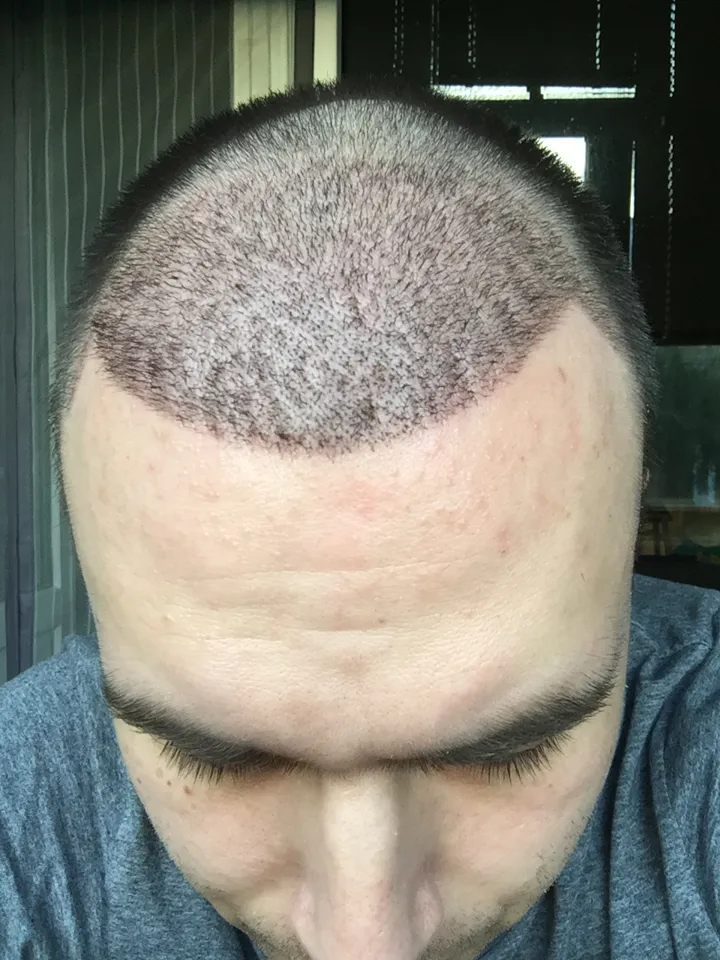
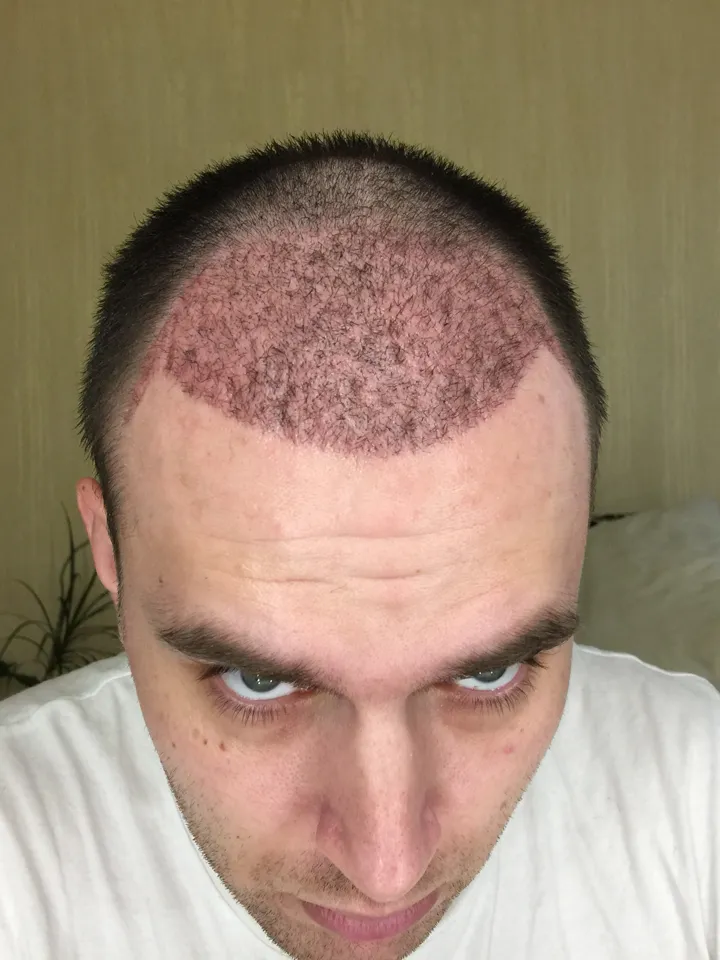
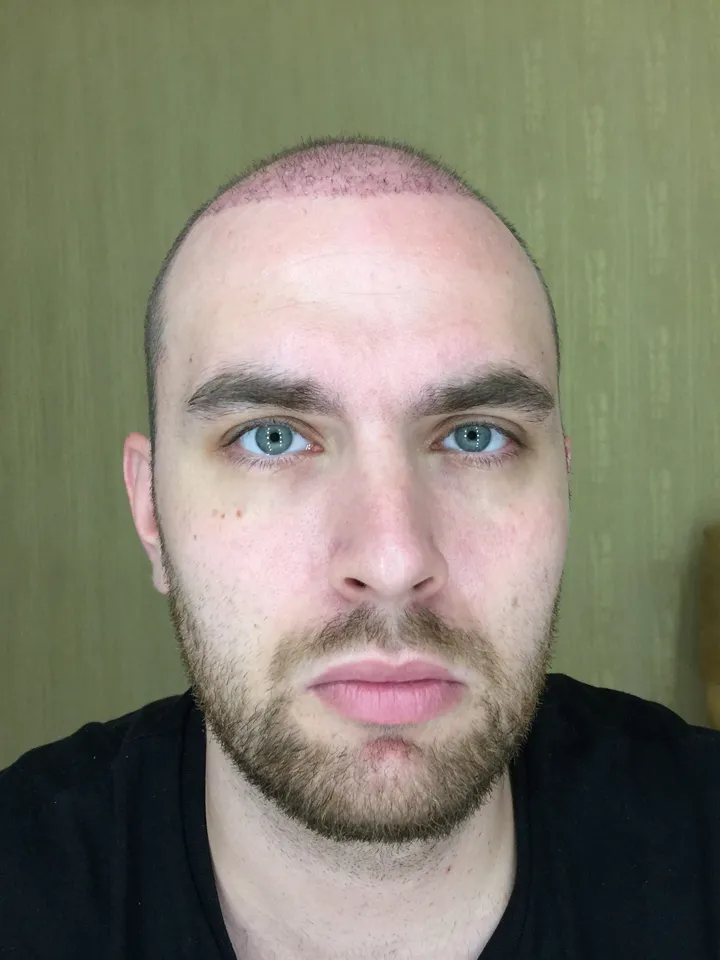
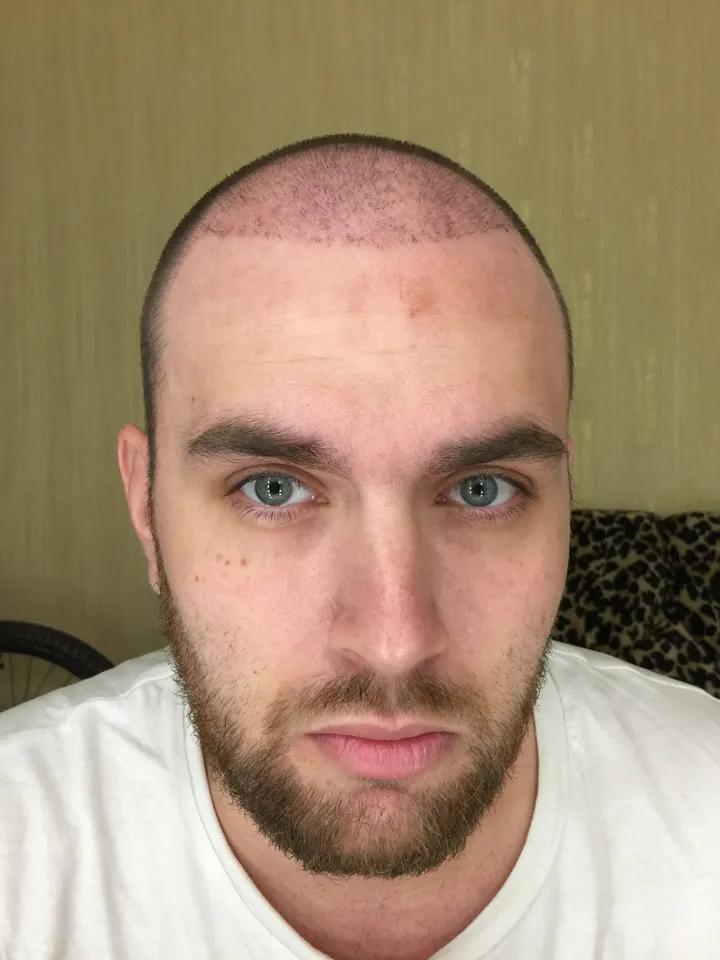
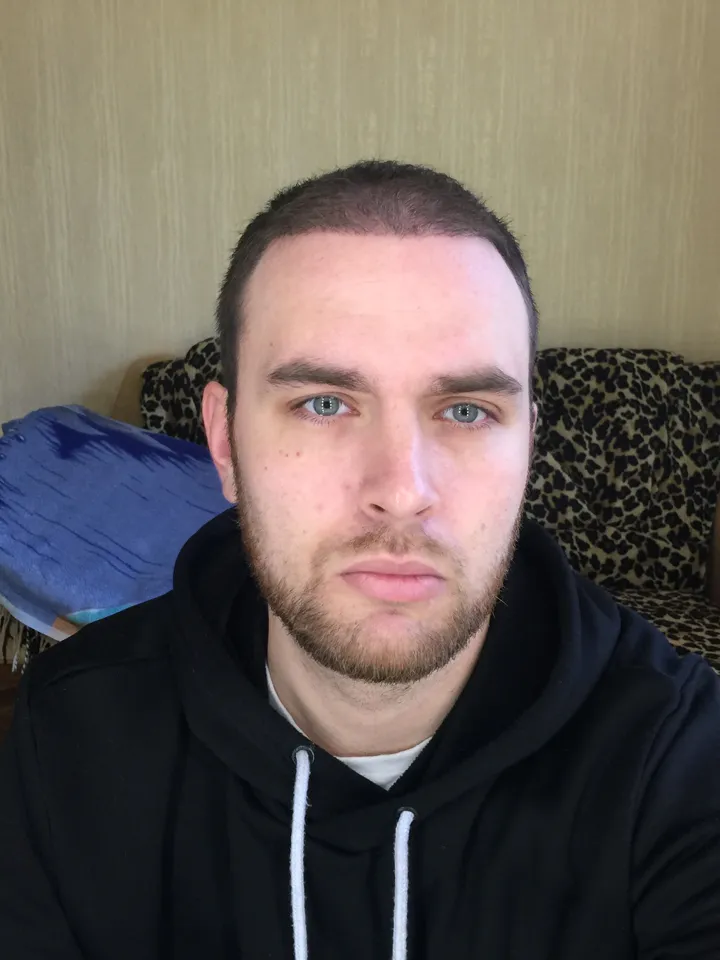
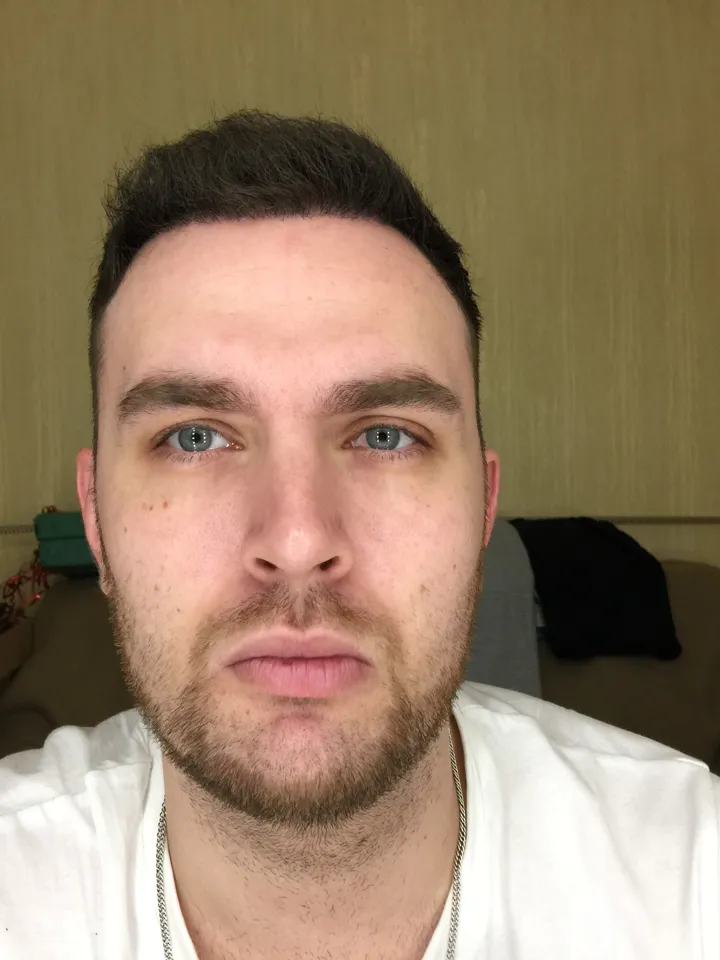
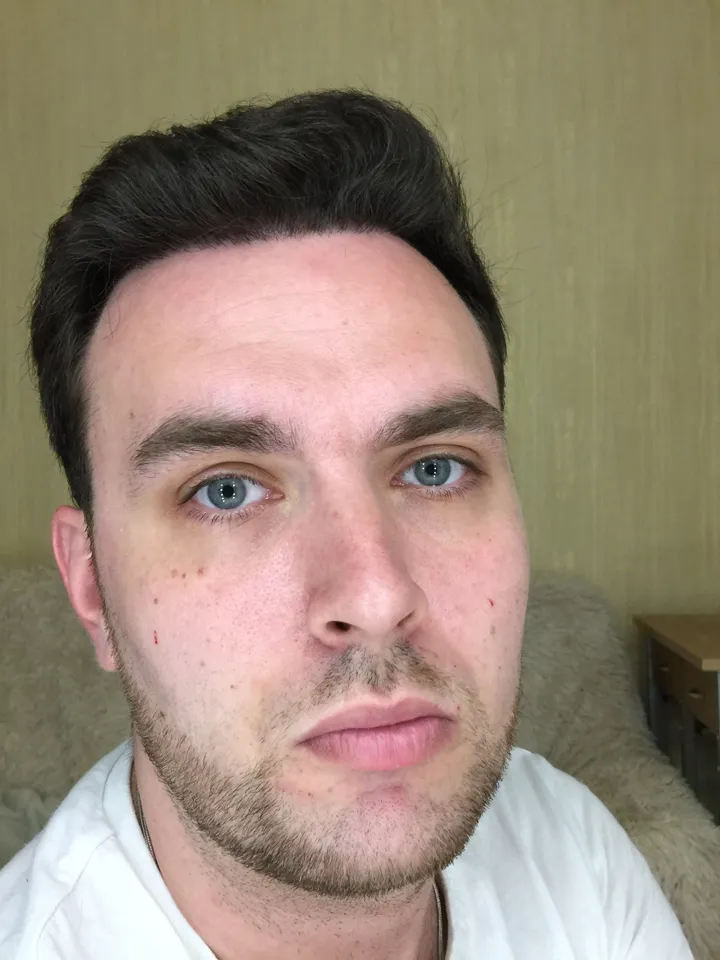
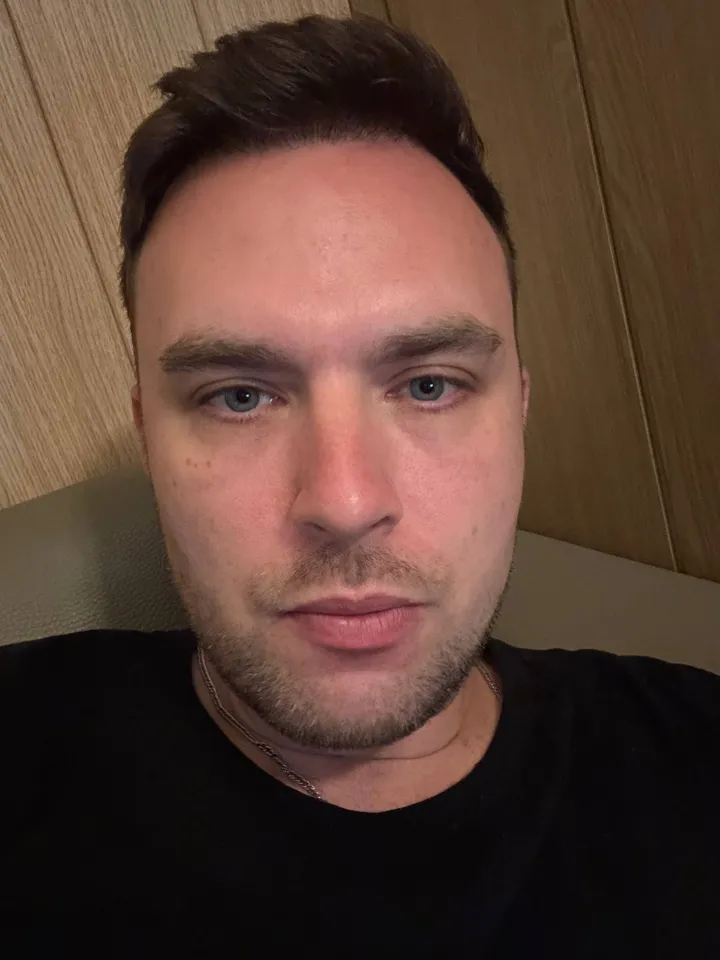 3 weeks1 / 8
← Drag the slider to see how the hair grew →
Shock loss
The transplanted hair starts to fall out, from about day 10.
Donor area (back of the head)
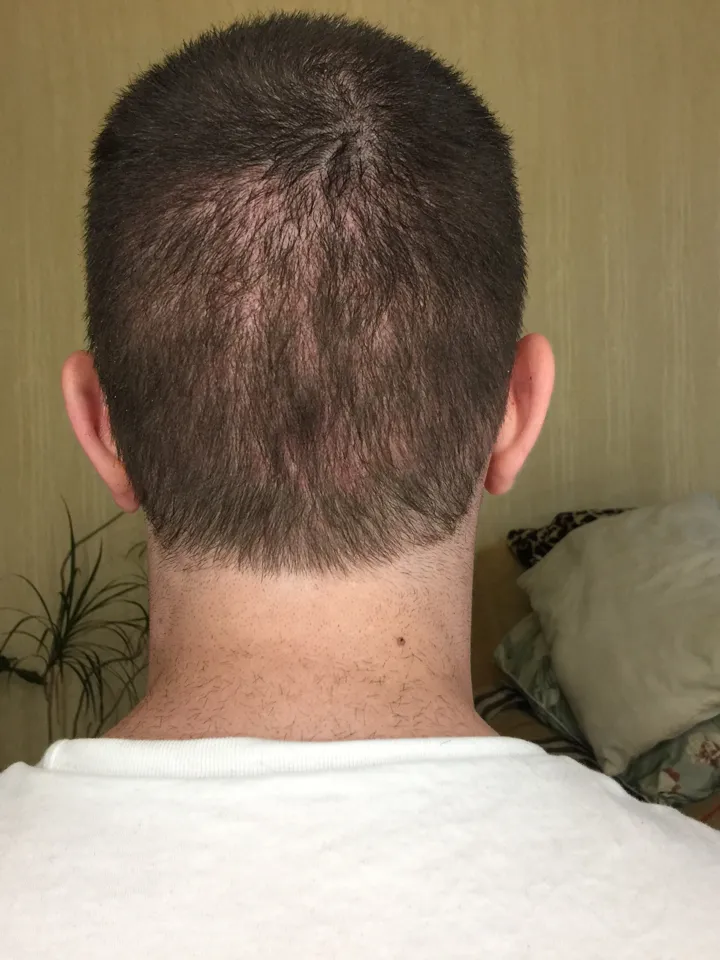
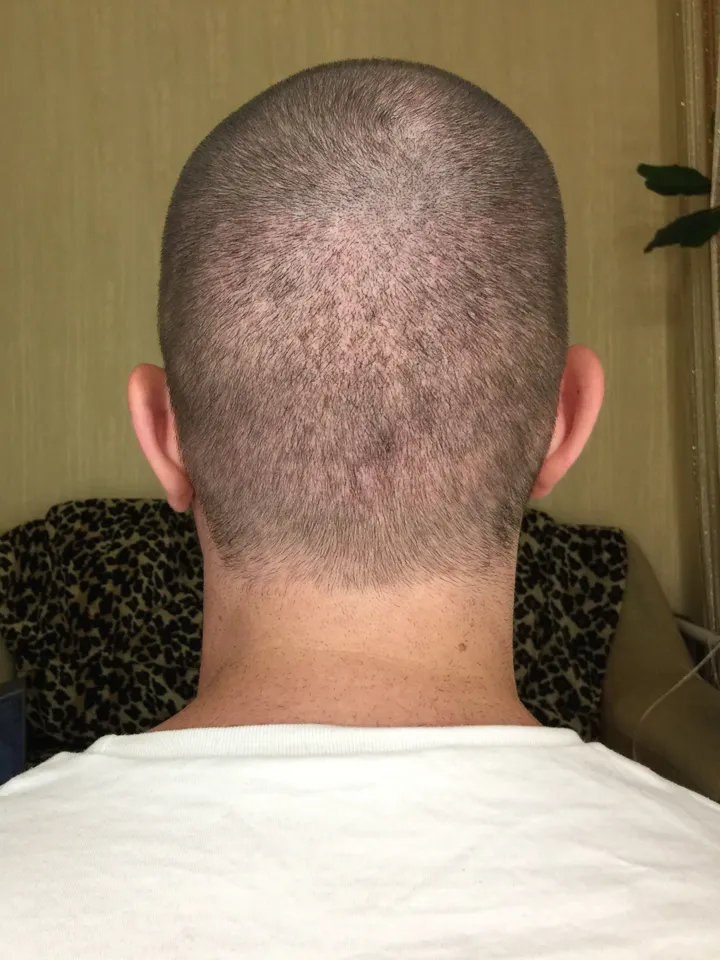
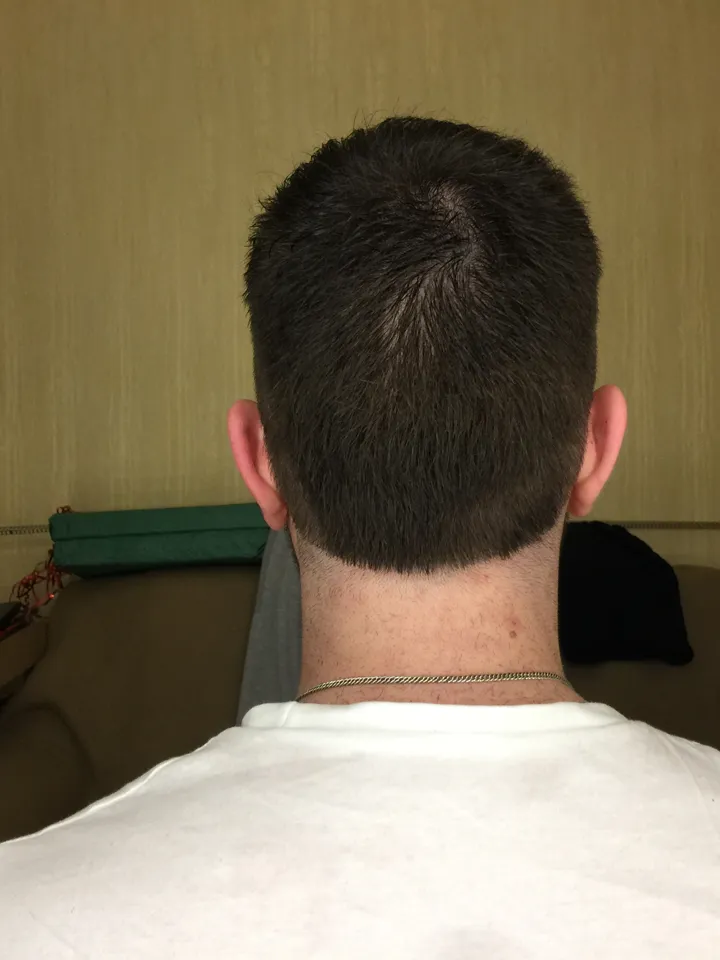
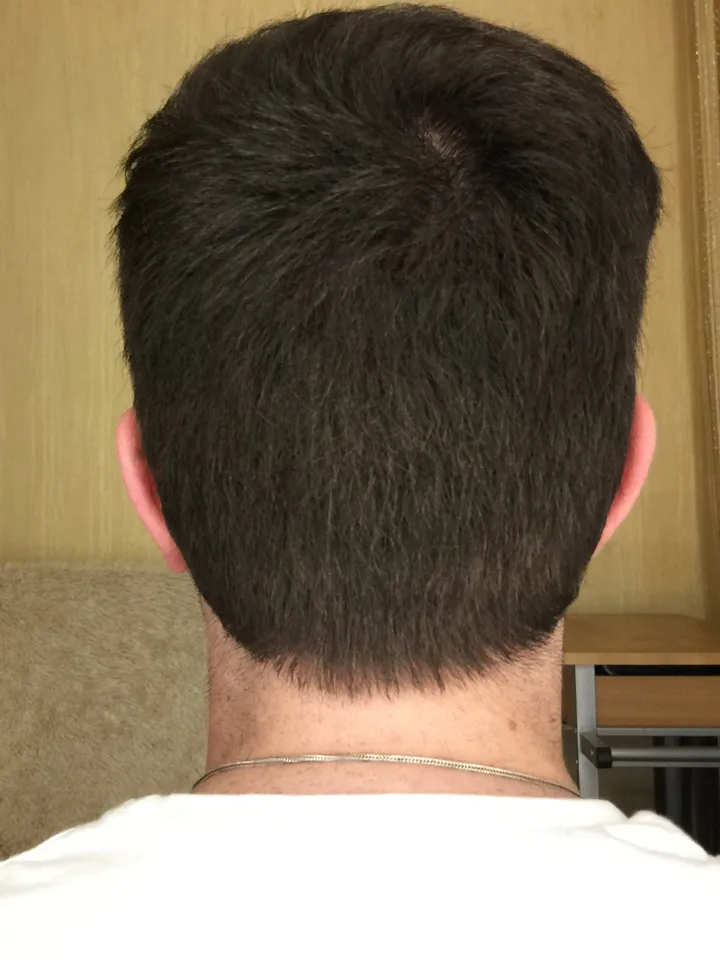
Same angles over time, July 2020 — today
I wrote about the costs in a separate article. How much it cost — my real receipt → And what to check before you pick a clinic is in my clinic checklist.
The Honest Truth
It's not magic — but it's not as scary as it seems either. Many people say the first 3–4 months are psychologically tough; for me they were completely normal.
Also: a transplant moves hair from one place to another. It doesn't create new hair.
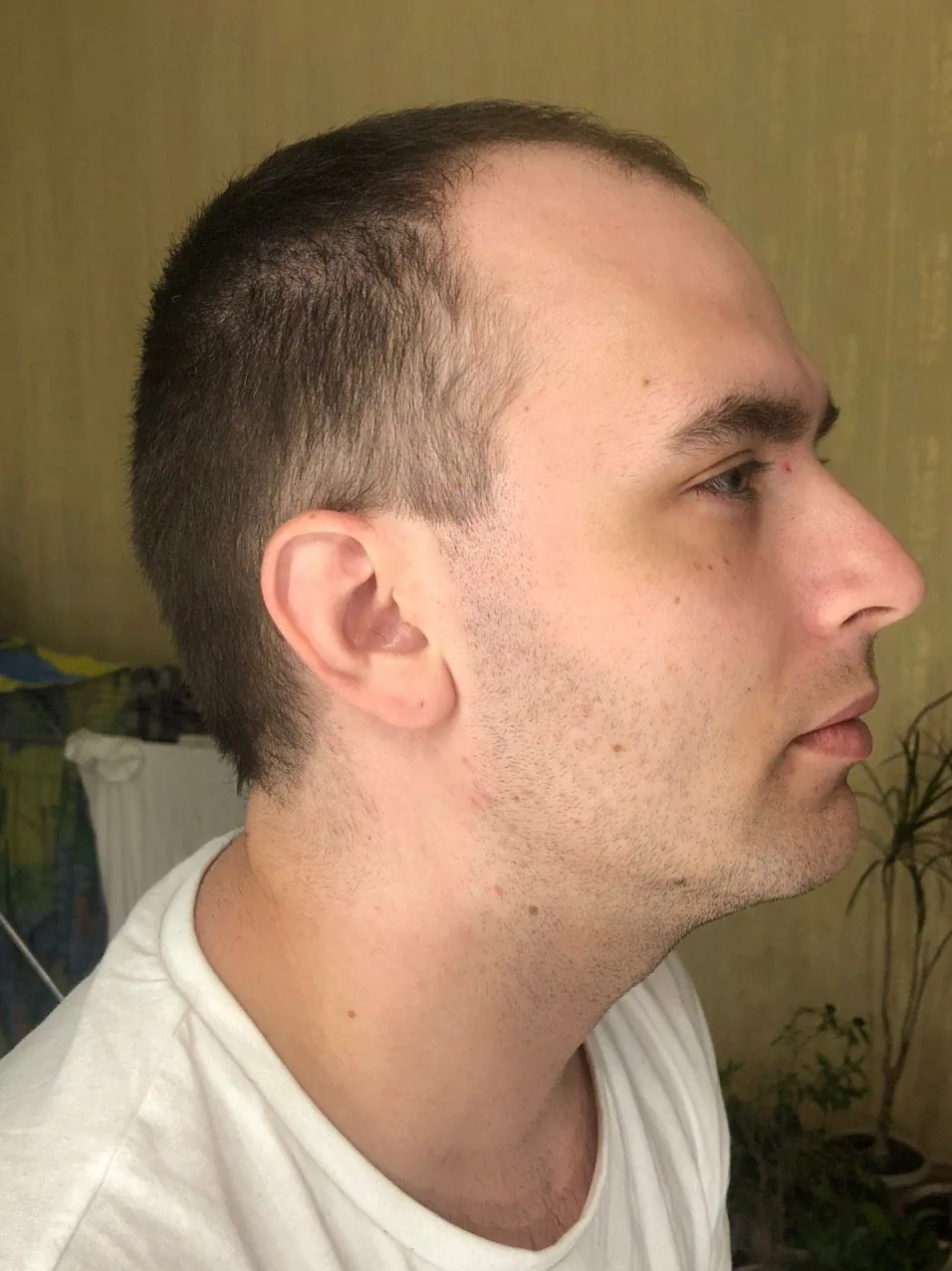 Before
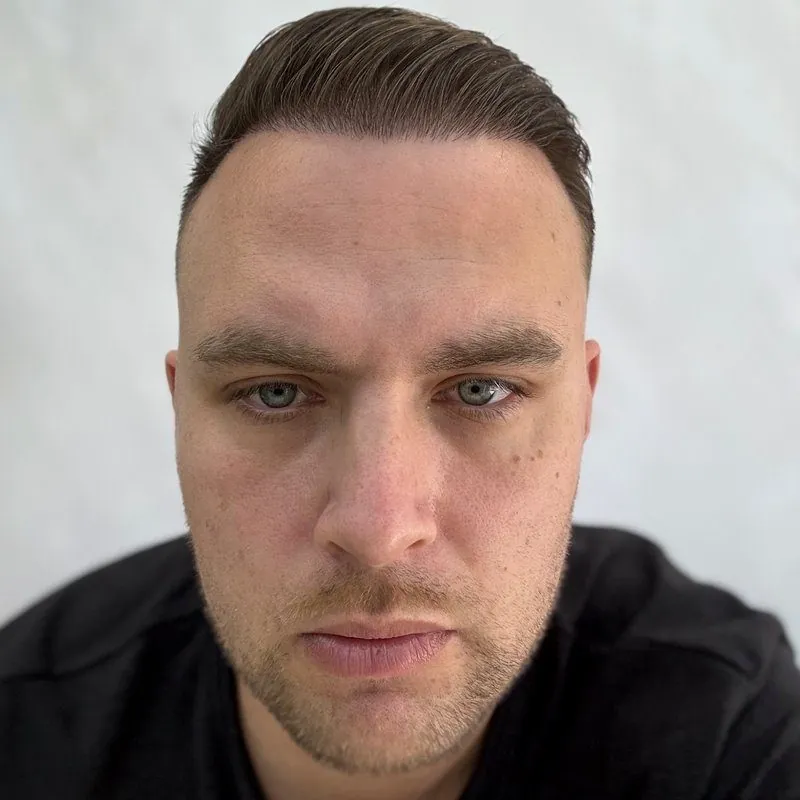 After
Would I do it again? Without a second thought — and I'd do everything exactly the same way. I haven't regretted it for a single day.
I expected a decent result, but it turned out beyond my expectations.
I stopped thinking about it after about the fourth year. I hardly remember being bald now; it's just a habit.
I also felt a bit more confident after the transplant. You feel more sure of yourself, and nobody can take that away.
One of the nicest moments was flying home when it was all done: the transplant had gone well and the new hairline looked great.
If I could say one thing to myself before the operation, it would be: don't be afraid, do what you want to do.
If you want to do it, there's no need to doubt: do it.
All of this is just my own path: everyone's is different, and the result depends on the particular person.
I followed everything the clinic and the manager recommended. I'm sharing only my personal experience — everyone should check everything with the doctor at their own clinic, since recommendations may have been updated since 2020.
Frequently Asked Questions
Watch the Full Journey
I documented my entire transplant journey on YouTube — from day 1 to day 365. No filters, no sponsorships, just real results:
Thinking About a Hair Transplant?
Book a 1-hour personal consultation. I’ll help you choose a clinic, prepare the right questions, and avoid common mistakes.
Book Consultation — €49